Journey along the Millennial Ice Route, an adventure to a timeless giant of ice and legend.
Circo Los Altares: Southern Ice Field
Exploration Summary
Location Southern Patagonian Ice Field, Bernardo O'higgins National Park, Aisén Patagonia
Type of Adventure Fully guided expedition with glacier progression in rope teams and remote camps.
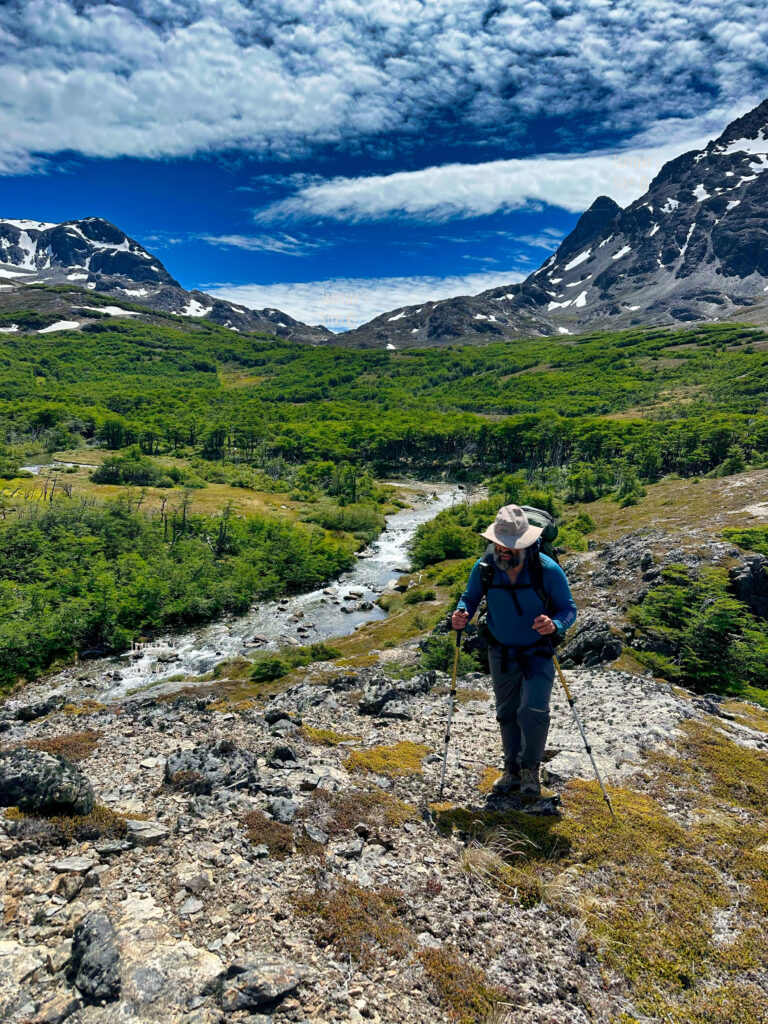
Terrain Snow, ice, rock, loose gravel descents, mud—requiring confident movement on irregular ground.
Physical Difficulty High. Daily Effort with 8–9 hours/day, roughly 10–12 km/day (6.5 to 7.5 miles/day) on mixed mountain/ice terrain.
Technical Difficulty High. Glacier, rocky, and forest terrain. Requires adaptation to irregular ground on extended treks.
Focused on Shared exploration, learning, and presence
Experience Highlights
Breathtaking glacial landscape
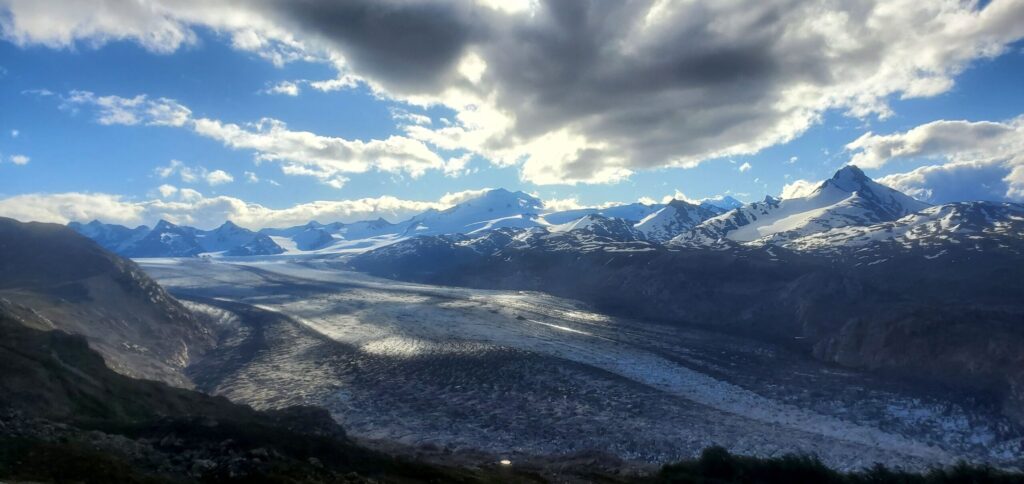
The Southern Ice Field are a vast expanse of interconnected glaciers that offer a unique and majestic visual spectacle.
Millennial history
Its formation is a testimony of the geological processes that have shaped Patagonia for thousands of years.
Legendary explorations
The site has been the scene of iconic expeditions, from early cartographic explorations to contemporary scientific research.
Unique biodiversity
The area is home to a rich variety of fauna and flora adapted to this extreme environment, such as the huemul, the emblem of Chile.
Indigenous cultural richness
The traditions of the native peoples who live near this frozen kingdom bring a unique cultural dimension to the area.
Visible climate impact
Glacial tongues reflect the effects of climate change, making the visit an eye-opening and educational experience.
Endless beauty of sky and earth
From the sun's reflections on the ice to the starry views on clear nights, this destination is a setting to contemplate the connection between nature and the cosmos.
A place where time slows and the vastness of nature speaks, offering a truly unforgettable experience.
Overview
The Secret Treasure of Patagonia
For many, Patagonia evokes an image of wildlife, nature, and the freedom that comes with the figure of the gaucho. Located on the southern tip of the continent, the region offers endless possibilities to explore the beauty and simplicity of our natural world. In this land of mysteries, lies one of its most iconic treasures, Southern and Northen Ice Field.The Southern Patagonian Ice Field, protected by Bernardo O’Higgins National Park,, a park that is part of the Route of the Parks of Patagonia, is a large expanse of continental ice, located in the Patagonian Andes, on the border between Argentina and Chile, extending for more than 350 km along the Andes mountain range.
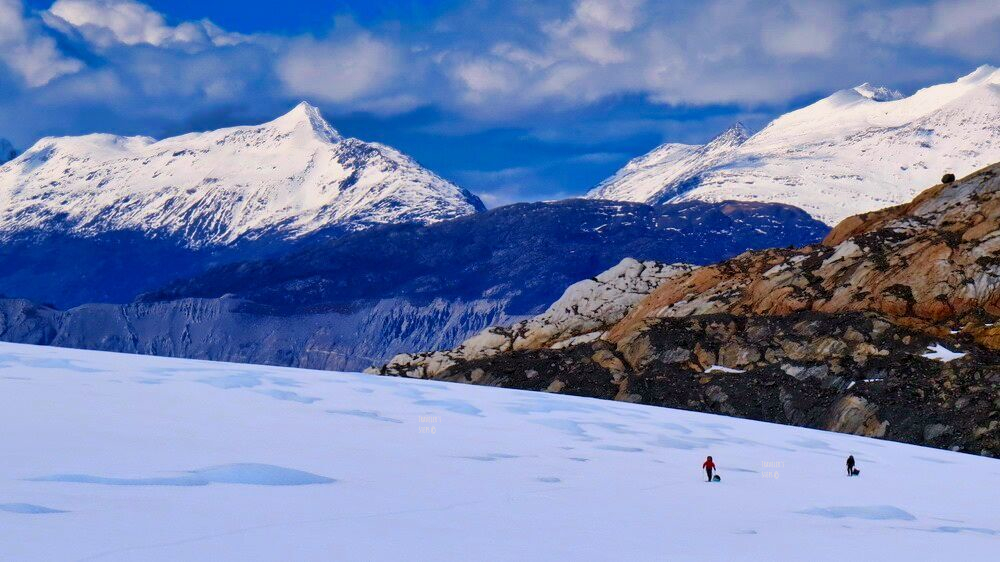
The Southern Ice Fields, a vast ocean of millennia-old ice in the heart of Patagonia, is much more than just a towering landscape. With about 13,000 square kilometers of interconnected glaciers, it is the second largest non-polar ice sheet on the planet, after Greenland.
During the last glaciation, more than 20,000 years ago, ice shaped fjords, lakes and mountains, shaping the majestic Patagonian landscape. Here, eternal winds and relentless rains work alongside the ice to tell stories of transformation and resilience.
This natural colossus also bears witness to human feats. From the explorations of cartographers such as Alberto de Agostini to modern incursions, every step on the ice reflects perseverance. Indigenous cultures also left their mark here, living on the edge of this icy realm.
Today, the Southern Ice Fields face the impact of climate change. Its glaciers, which have been keepers of secrets for centuries, are receding alarmingly, raising questions about their future and humanity's role in preserving it.
There are landscapes you visit, and landscapes you enter.
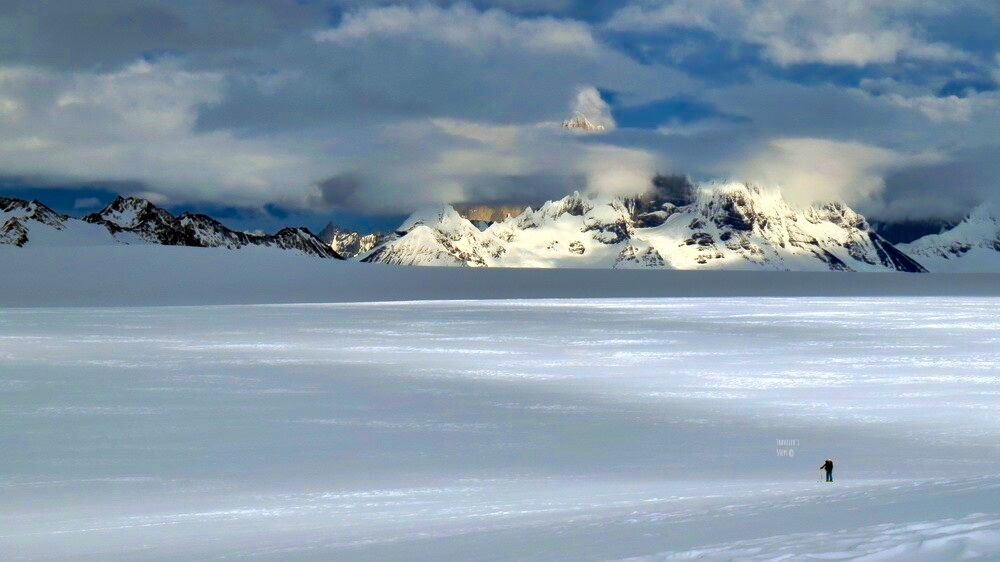
Circo Los Altares sits inside the Southern Patagonian Ice Field — a place where wind rewrites plans, where weather compresses time, and where the terrain itself is alive. Here, progress is not measured by comfort or speed, but by judgment, team rhythm, and clean movement.
This is not a “long trek.” It is an expedition step by step into a moving world of ice.
La Esencia de Esta Experiencia
This experience has an "Explorer" Level classification, which according to our classification system is a physically and technically demanding level experience: "High". It is designed for experienced mountain trekkers who can move safely and independently on complex ground for multiple consecutive days. For this reason, you will need to feel comfortable walking 10+ kilometers a day, with journeys of up to 8+ hours a day and multi‑day cumulative fatigue across a 14–16 day expedition window. Each member must be able to move independently and safely, through multiple uneven terrains (snow, ice, rock and mud). including steep descents, loose gravel. Three important aspects throughout the development of this experience are:
That each member has the flexibility and mental strength to adapt to possible waiting times in tents and/or shelters; patience and composure are part of the required skillset.
Mutual and active support, teamwork and tolerance in a remote environment are very important.
Teams will be formed to carry out glacier progression. Respect for safety decisions made in response to weather, terrain, and group condition.
Patagonia’s ice frontier, a rare expedition for travelers who want the real thing, and are ready to earn it.
What It Means to Enter the Ice Fields Entering the Southern Ice Fields is not like going deeper into a trail network. It is stepping into a system—one shaped by moving ice, abrupt weather shifts, and terrain that demands constant attention. sistema — moldeado por hielo en movimiento, cambios abruptos de clima y un terreno que exige atención constante.
The icefield sets the schedule
In the icefields, plans are provisional. Sun, rain, snow, and wind can rotate through the same day, and conditions can force pauses or waiting periods in camp or refuge. The expedition requires the mental flexibility to accept delays—and the discipline to move when the window opens.
Expedition progress is a team discipline This journey is built around active teamwork: shared pacing, mutual support, and tolerance under fatigue in a remote environment. Glacier travel is organized in rope teams, and the group’s cohesion is part of the safety system—not an optional cultural bonus.
The terrain is demanding even when it isn’t “technical” You don’t need to be a climber, but you do need mountain competence: stable movement across snow, ice, rock, and irregular ground; confident descending on loose gravel; and the ability to travel safely and independently under changing conditions.
This is an expedition because it asks for commitment
Long days (often 8+ hours), cumulative effort across two weeks, and the reality of remote camps turn Patagonia from “beautiful” into “serious.” This is where trekking becomes expedition travel —not because of heroics, but because of what the terrain requires.
Who This Expedition Is For
Ideal for travelers who:
Have prior multi‑day mountain trekking experience
Can handle long days on irregular terrain with consistent performance
First‑time trekkers or travelers without mountain experience
Comfort‑first itineraries or travelers unwilling to adapt to weather delays
Anyone unable to move safely across snow/ice/rock and steep loose descents
Step into Southern Ice Field. Begin your exploratory journey.
How We Explore the world
To explore the Southern Ice Fields is to go beyond marked routes.
Here, the climate dictates the rhythm, and judgment becomes more vital than any plan.
At Circo Los Altares, exploration becomes expedition travel: deliberate, adaptive, and grounded in respect for ice, wind, and distance. We move step by step, accepting that progress is earned and that restraint is as important as ambition.
We Enter a System, Not a Landscape
The Southern Patagonian Ice Field is not static terrain. It is a living system of glaciers, weather corridors, and exposed ground that constantly reshapes itself.
Exploration here means:
Reading ice conditions, not assuming stability
Understanding how wind and precipitation govern movement
Accepting that access is conditional, not guaranteed
This is not a place to impose an itinerary. It is a place to negotiate passage.
Progress Is Built Around Weather Windows
In the icefields, timing is everything. We plan carefully — and wait when necessary.
Weather windows determine movement days
Delays and pauses are part of safe expedition logic
Momentum is built conservatively to protect the team
Patience is not downtime; it is a core expedition skill.
Rope Teams and Shared Responsibility
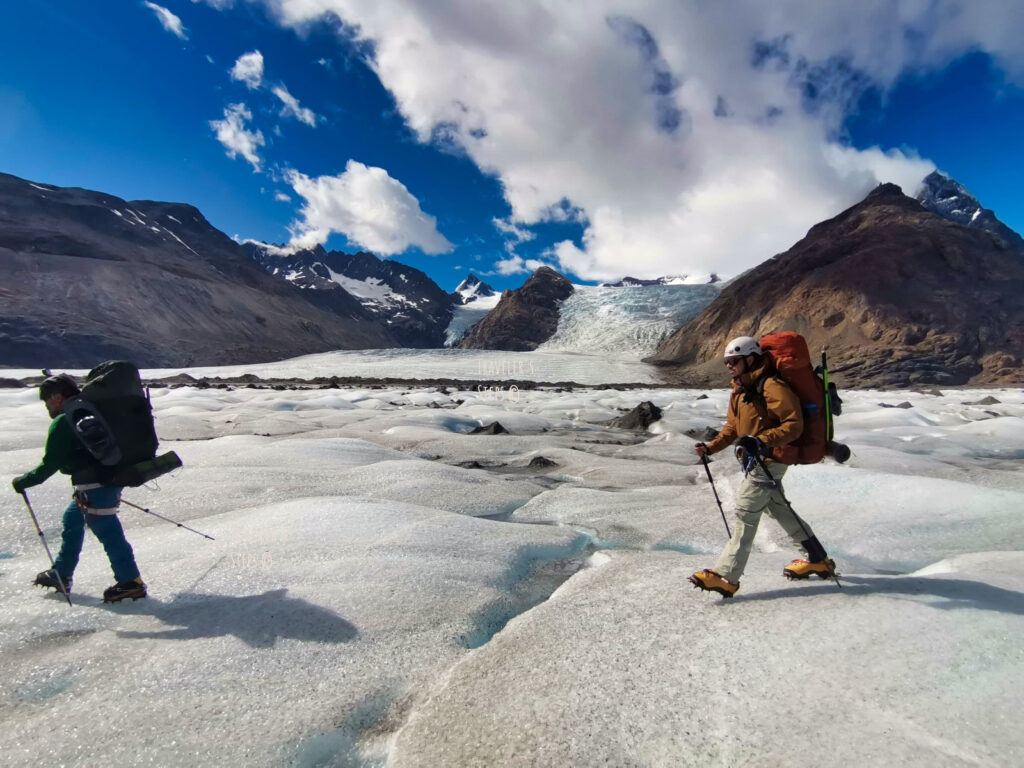
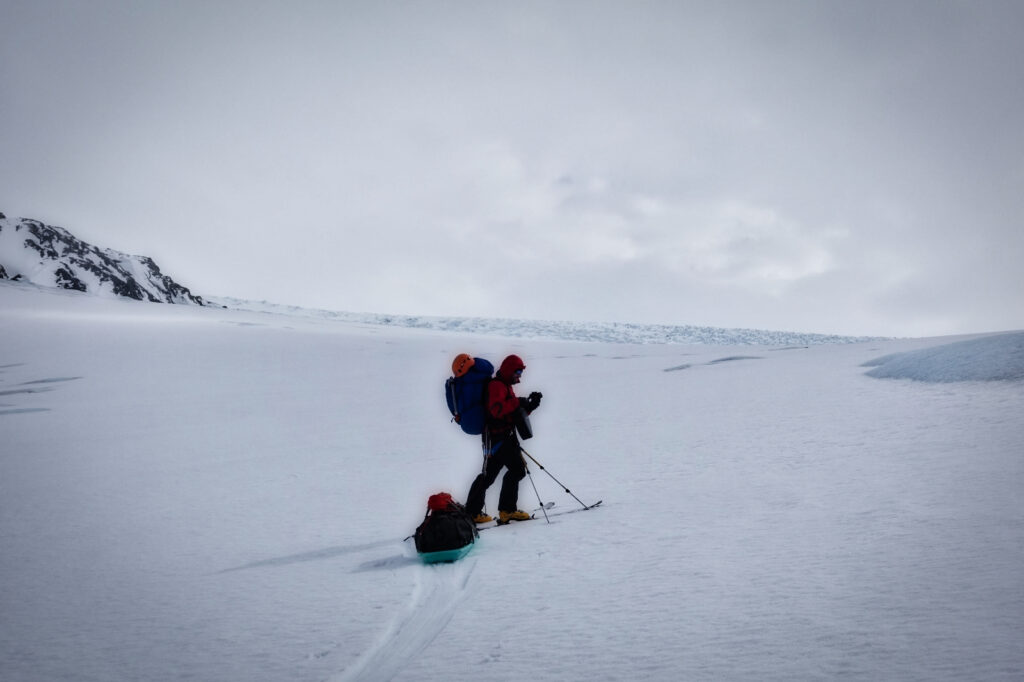
Movement across glaciers is done in rope teams, where each person’s awareness affects the entire group. Exploration here requires:
Constant communication
Coordinated pacing and spacing
Mutual responsibility for safety and efficiency
This is why group size is kept small and cohesion is non‑negotiable. In the icefields, the team is the safety system.
Walking as Deliberate, Technical Movement
On the icefield, walking is intentional. Every step considers:
Foot placement on snow, ice, rock, or moraine
Balance under load and fatigue
Energy conservation over long, consecutive days
This is non‑technical terrain, but it demands mountain literacy — the ability to move cleanly and confidently across irregular surfaces without rushing.
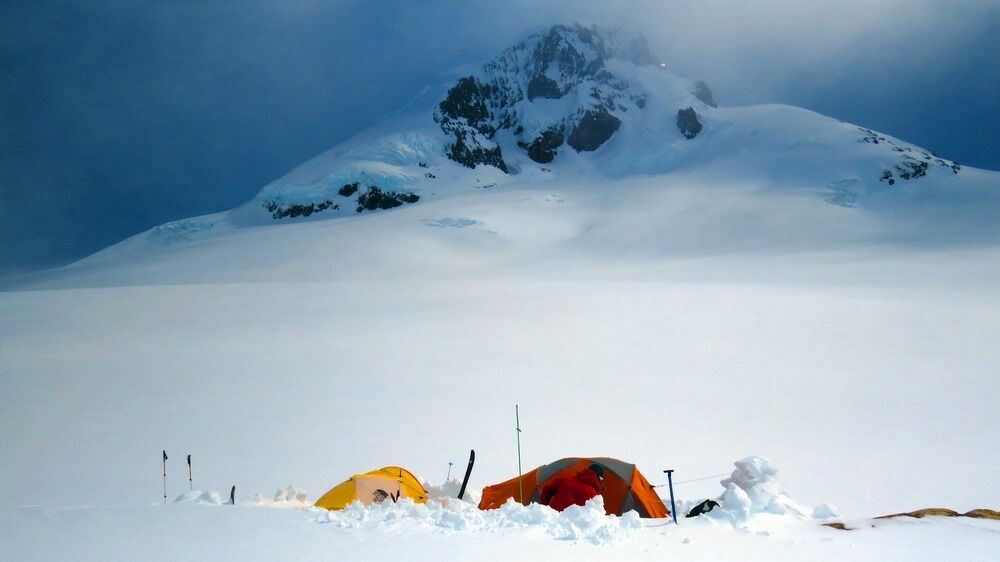
Camp Is Part of the Expedition
Camps are not recovery resorts; they are operational bases. At camp, we:
Manage equipment and clothing for the next day
Adapt plans based on updated conditions
Rest, hydrate, and maintain morale
Long waits due to weather may occur. Mental resilience and flexibility are essential to maintaining expedition rhythm.
The Guide as Expedition Leader
Your guide’s role extends far beyond navigation. They are responsible for:
Interpreting ice, terrain, and weather in real time
Making conservative decisions under uncertainty
Managing group energy across a multi‑week effort
Authority here is grounded in experience and restraint. Turning back or waiting can be the correct call — and success is measured by sound judgment, not distance covered.
Respect Defines Success
Exploring the icefields requires humility. We move with respect for:
A fragile and rapidly changing glacial environment
The limits imposed by weather and terrain
The safety of the group over individual ambition
Leaving the icefield intact — and the team intact — is the true measure of a successful expedition.
To explore the Southern Ice Fields is to accept uncertainty,
to move deliberately, and to trust the process step by step.
What is part of your adventure?
What is Included
Transportation: To and from Balmaceda Airport. Private transportation for all land and water transfers.
Accommodation: In intermediate locations, guests are accommodated in shared tents or cabins. Private tents or cabins may be available for an additional cost. During the crossing: equipped camps (expedition tents, cooking equipment, etc.).
Meals: During the expedition days: breakfast, marching rations, lunch and dinner included. Water and hot drinks are always available at the camps.
Guides: Experienced and multilingual guides provided for the activity.
Equipment: Group expedition gear. Safety and emergency equipment: radios, satellite communications (InReach), first aid kit.
Other: Support in obtaining necessary permits. National park entry fees and charges, as described in the program.
What is not Included
Transportation: Airfare from origin to Balmaceda airport.
Accommodation: Please note that lodging outside the scheduled travel program, such as additional hotel nights due to itinerary changes, is not covered and may incur extra costs.
Meals: Lunch is not included on the day of arrival in Coyhaique. Requests will be considered and accommodated whenever possible; however additional fees may be applicable. Extra beverages including alcoholic drink
Guides: Tips are not included. Porters may be arranged but will involve an additional cost.
Equipment: Personal gear (For details, consult for the recommended gear list). Personal international travel, accident and health insurance. (For further details regarding personal insurance, do not hesitate to ask).
Other: Services in Santiago if required, we will gladly assist with organizing transfers, accommodations, city tours, etc. Please contact us if needed. Additional permits: currently, no extra permit costs are anticipated. If this changes, participants will be informed and must cover these additional expenses.
Any other service not included in the program.
Preparing for the journey
What level of physical fitness is required?
This experience is classified as: “Explorer – Demanding.”
You must feel comfortable walking more than 10 km per day, carrying gear, and traversing snow, ice, and rocky terrain.
Good balance, endurance, and prior mountain trekking experience are strongly recommended.
How long is the trip and what is the itinerary?
Duration: 16 days
Structure: Arrival in Coyhaique (Day 1), expedition across glaciers and mountains (Days 2–14), return to Coyhaique (Day 15).
Expect long trekking days (8–9 hours, 10–12 km daily) with some “effort days” lasting over 16 hours and covering up to 18 km.
What is the best season to go?
From November to March is ideal.
Inside the ice field, daytime temperatures usually range between –1°C and –4°C.
In summer, you can expect up to 16 hours of daylight.
The weather is highly unpredictable: sun, rain, snow, or strong winds can all occur in a single day.
How many people are required for the trip to take place?
Minimum group size: 2–3 participants (depending on format)
Small groups ensure safety and teamwork during glacier crossings.
What equipment should I bring?
Personal trekking gear (trekking boots, layered apparel, rainproof gear, backpack)
Trekking poles are highly recommended.
Group expedition gear (ropes, glacier equipment) is organized by the guides, but each traveler must carry their essential personal items.
How challenging is the terrain?
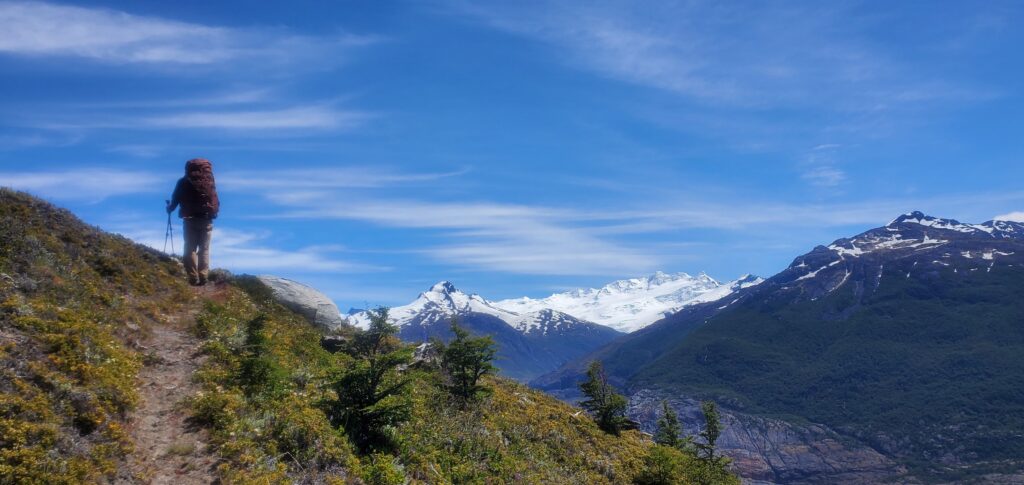
Patagonian mountains are not extremely high, but they are steep and rugged.
Trails include loose rock, mud, snow, and ice. River crossings, strong winds, and sudden weather changes are part of the adventure.
Teamwork and adaptability are essential.
Media Gallery
Pictures
Video Clips
Other adventures to inspire your spirit!
Patagonia: Echoes of Aisén
See more details
A journey into the landscapes and history of Puerto Ibáñez, Aisén.
Location Aysén Patagonia — Lake Chelenko (General Carrera) and surrounding valleys
Type of Adventure Exploratory trekking, fly fishing and landscape immersion.