La Ruta de los hielos Milenarios, Circo Los Altares Campo de hielo Sur
An expedition into an ice giant, one of the largest non‑polar ice masses on Earth.
Exploration Overview:
Región Campo de Hielo Patagónico Sur, Parque Nacional Bernardo O'higgins, Patagonia Aysén.
Estilo Expedición completamente guiada con progresión en glaciar en equipos encordados y campamentos remotos.
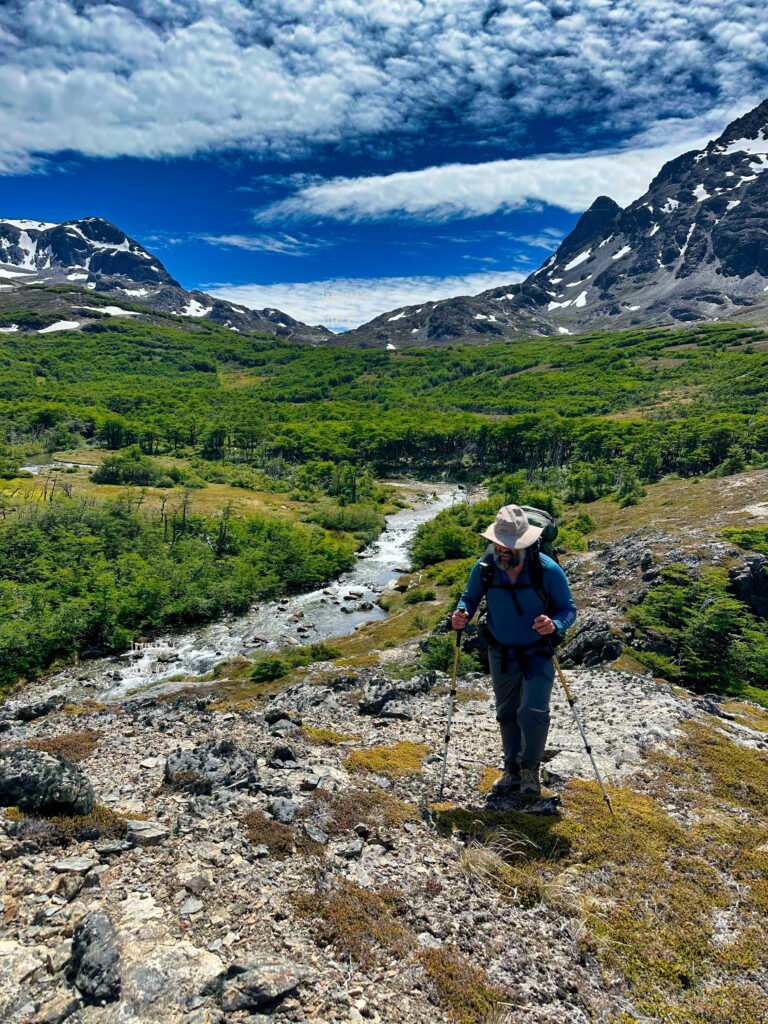
Terreno Nieve, hielo, roca, descensos de grava suelta, barro — que requieren movimiento seguro y confiado en terreno irregular.
Nivel Físico Alto. Esfuerzo diario con jornadas de 8–9 horas/día, aproximadamente 10–12 km/día en terreno mixto de montaña y hielo.
Nivel Técnico Alto. Experiencia en terreno glaciar, rocoso, bosques. Capacidad de adapción a terreno irregular en trekking de larga duración.
Enfoque Enfocados en la exploración compartida, el aprendizaje y la presencia.
Experience Highlights
Paisaje glaciar impresionante
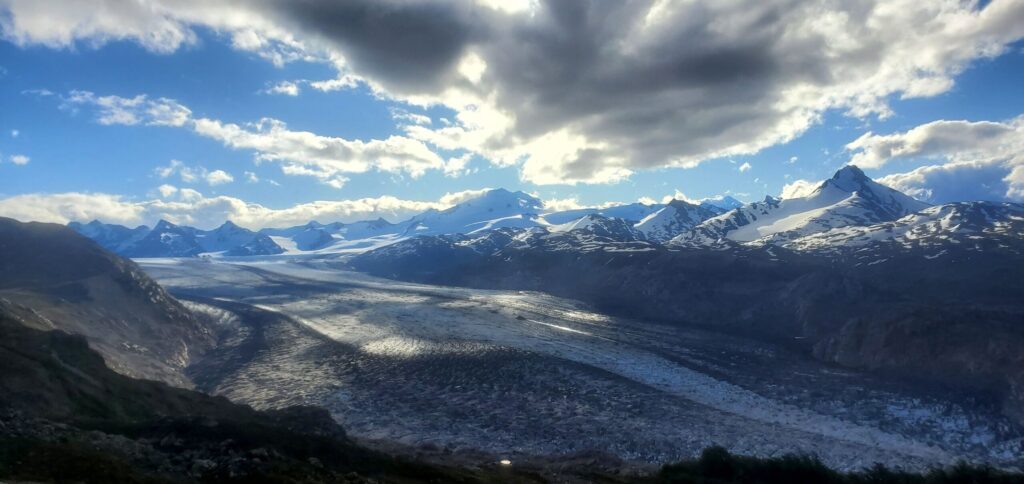
Los Campos de Hielo Sur son una vasta extensión de glaciares interconectados que ofrecen un espectáculo visual único y majestuoso.
Historia milenaria
Su formación es un testimonio de los procesos geológicos que han moldeado la Patagonia durante miles de años.
Exploraciones legendarias
El lugar ha sido escenario de expediciones emblemáticas desde las primeras exploraciones cartográficas hasta investigaciones científicas contemporáneas.
Biodiversidad única
La zona alberga una rica variedad de fauna y flora adaptada a este entorno extremo, como el emblemático huemul.
Riqueza cultural indígena
Las tradiciones de los pueblos originarios que habitan cerca de este reino helado aportan una dimensión cultural única al área.
Impacto climático visible
Las lenguas glaciares reflejan los efectos del cambio climático, lo que convierte la visita en una experiencia reveladora y educativa.
Belleza infinita del cielo y la tierra
Desde los reflejos del sol sobre el hielo hasta las vistas estrelladas en las noches despejadas, este destino es un escenario para contemplar la conexión entre la naturaleza y el cosmos.
Overview
The Secret Treasure of Patagonia
Para muchos, Patagonia evoca una idea de vida silvestre, naturaleza, y la libertad que entrega la figura del gaucho. Ubicada al sur del continente, la región ofrece una infinidad de posibilidades para explorar la belleza y simpleza de nuestro mundo natural. En esta tierra de misterios, yace uno de sus tesoros más emblemáticos, Campos de Hielo. El campo dehielo patagónico sur, protegido por el Parque nacional Bernardo O’Higgins, parque parte de la Ruta de Los Parques de la Patagonia, es una gran extensión de hielos continentales, situado en los Andes patagónicos, en la frontera entre Argentina y Chile, extendiéndose por más de 350 km a lo largo de la cordillera de los Andes.
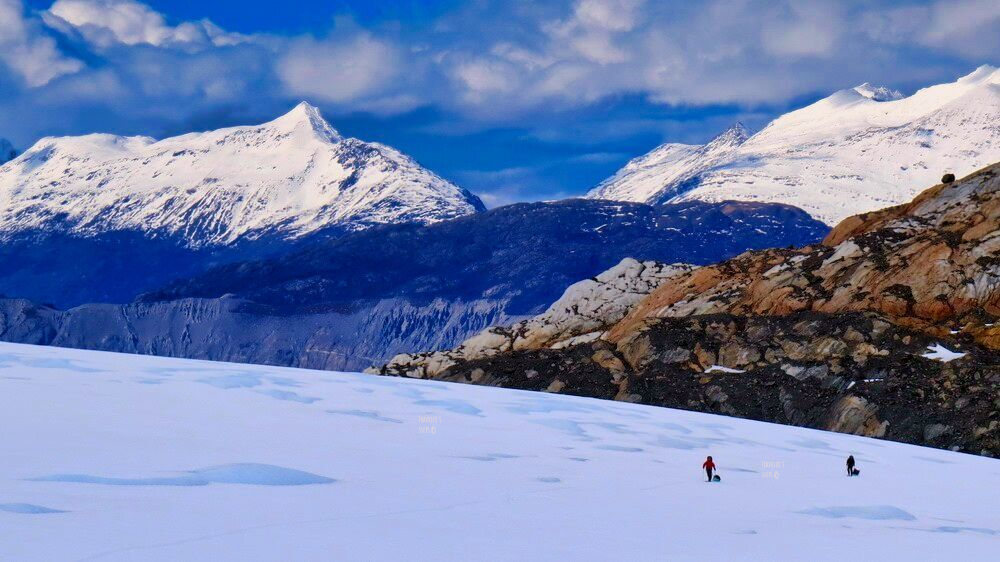
The Southern Ice Fields, a vast ocean of millennia-old ice in the heart of Patagonia, is much more than just a towering landscape. With about 13,000 square kilometers of interconnected glaciers, it is the second largest non-polar ice sheet on the planet, after Greenland.
During the last glaciation, more than 20,000 years ago, ice shaped fjords, lakes and mountains, shaping the majestic Patagonian landscape. Here, eternal winds and relentless rains work alongside the ice to tell stories of transformation and resilience.
This natural colossus also bears witness to human feats. From the explorations of cartographers such as Alberto de Agostini to modern incursions, every step on the ice reflects perseverance. Indigenous cultures also left their mark here, living on the edge of this icy realm.
Today, the Southern Ice Fields face the impact of climate change. Its glaciers, which have been keepers of secrets for centuries, are receding alarmingly, raising questions about their future and humanity's role in preserving it.
There are landscapes you visit, and landscapes you enter.
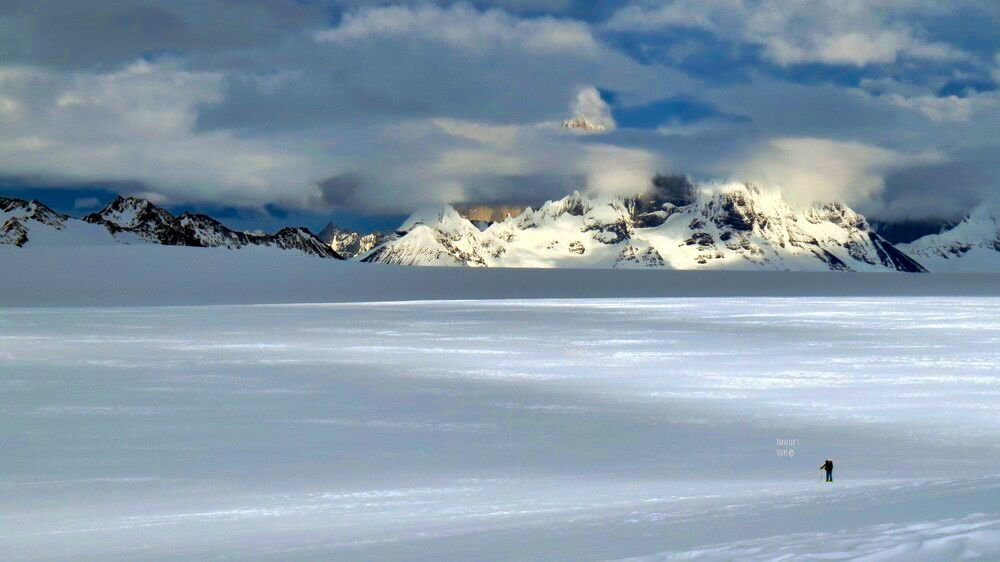
Circo Los Altares sits inside the Southern Patagonian Ice Field — a place where wind rewrites plans, where weather compresses time, and where the terrain itself is alive. Here, progress is not measured by comfort or speed, but by judgment, team rhythm, and clean movement.
This is not a “long trek.” It is an expedition step by step into a moving world of ice.
The Essence of This Experience.
Esta experiencia tiene una clasificación de Nivel «Explorador», lo cuál según nuestro sistema de clasificación es una experiencia de nivel: «Exigente» física y técnicamente. Está diseñada para montañistas con experiencia en trekking que puedan moverse con seguridad e independencia en terreno complejo durante varios días consecutivos. Por tal motivo, necesitarás sentirte cómodo caminando 10+ kilómetros al día, con travesías de hasta 8+ horas diarias y fatiga acumulada durante una expedición de 14–16 días. Cada integrante debe ser capaz de cargar equipo personal y mantenerse funcional en ambientes húmedos, fríos y ventosos, desplazarse de manera independiente y segura, a través de múltiples terrenos irregulares (nieve, hielo, roca y barro). incluyendo descensos empinados grava suelta. Tres aspectos importantes durante todo el desarrollo de esta experiencia son:
That each member has the flexibility and mental strength to adapt to possible waiting times in tents and/or shelters; patience and composure are part of the required skillset.
Mutual and active support, teamwork and tolerance in a remote environment are very important.
Teams will be formed to carry out glacier progression. Respect for safety decisions made in response to weather, terrain, and group condition.
Patagonia’s ice frontier, a rare expedition for travelers who want the real thing, and are ready to earn it.
What It Means to Enter the Ice Fields Entering the Southern Ice Fields is not like going deeper into a trail network. It is stepping into a system—one shaped by moving ice, abrupt weather shifts, and terrain that demands constant attention. sistema — moldeado por hielo en movimiento, cambios abruptos de clima y un terreno que exige atención constante.
The icefield sets the schedule
In the icefields, plans are provisional. Sun, rain, snow, and wind can rotate through the same day, and conditions can force pauses or waiting periods in camp or refuge. The expedition requires the mental flexibility to accept delays—and the discipline to move when the window opens.
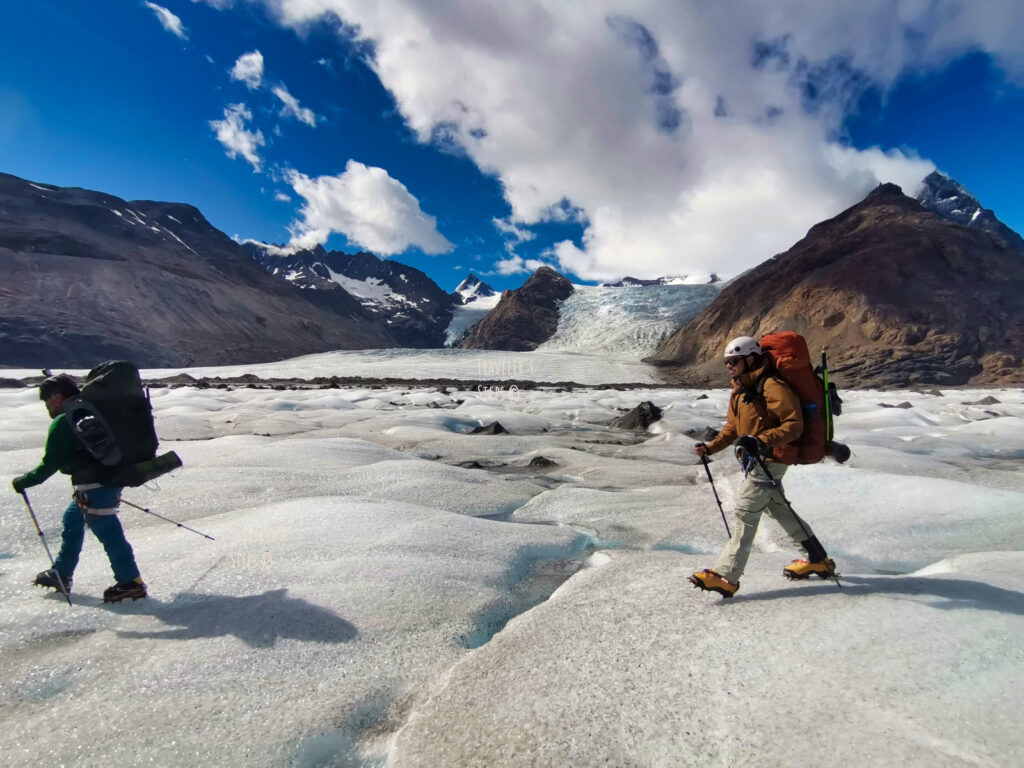
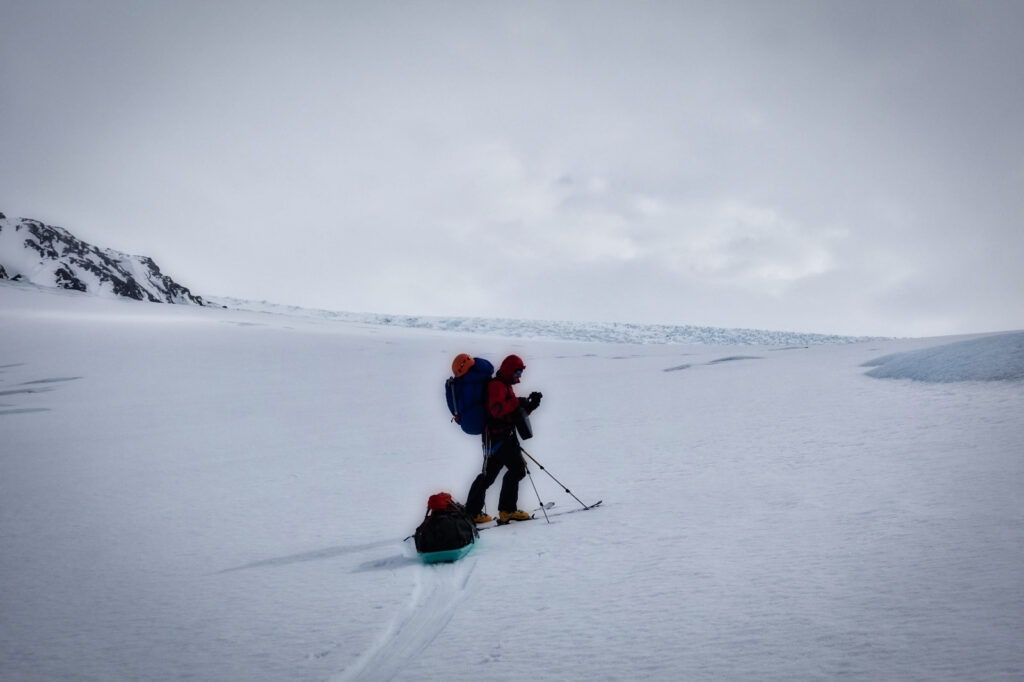
Expedition progress is a team discipline This journey is built around active teamwork: shared pacing, mutual support, and tolerance under fatigue in a remote environment. Glacier travel is organized in rope teams, and the group’s cohesion is part of the safety system—not an optional cultural bonus.
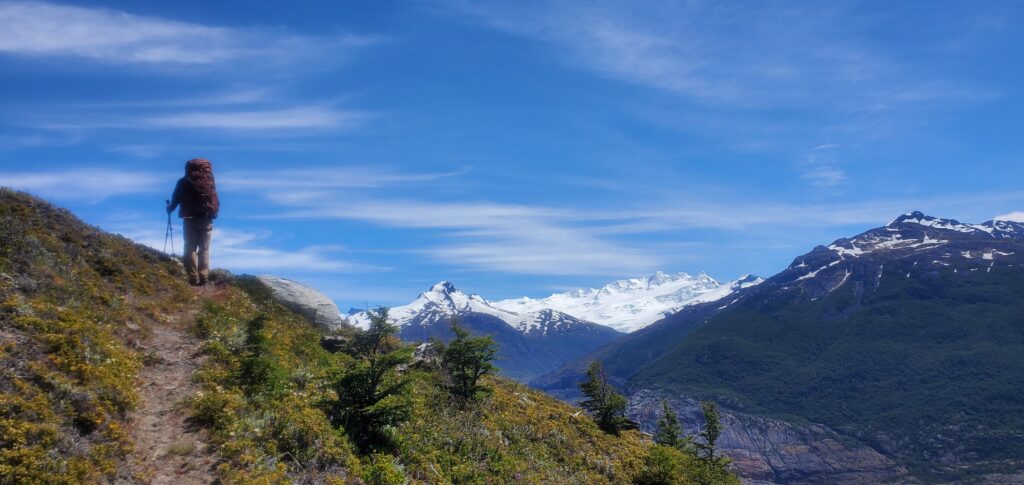
The terrain is demanding even when it isn’t “technical” You don’t need to be a climber, but you do need mountain competence: stable movement across snow, ice, rock, and irregular ground; confident descending on loose gravel; and the ability to travel safely and independently under changing conditions.
This is an expedition because it asks for commitment
Long days (often 8+ hours), cumulative effort across two weeks, and the reality of remote camps turn Patagonia from “beautiful” into “serious.” This is where trekking becomes expedition travel —not because of heroics, but because of what the terrain requires.
Who This Expedition Is For
Ideal for travelers who:
Have prior multi‑day mountain trekking experience
Can handle long days on irregular terrain with consistent performance
First‑time trekkers or travelers without mountain experience
Comfort‑first itineraries or travelers unwilling to adapt to weather delays
Anyone unable to move safely across snow/ice/rock and steep loose descents
Adéntrate en Los Campos de Hielo. Comienza Aqui tu exploración…
How We Explore the world
Explorar los Campos de Hielo Sur no consiste en seguir una ruta.
Se trata de operar dentro de un sistema en movimiento, gobernado por el clima, donde el juicio importa más que los planes.
En el Circo Los Altares, la exploración se convierte en viaje de expedición: deliberado, adaptable y fundamentado en el respeto por el hielo, el viento y la distancia. Avanzamos paso a paso, aceptando que el progreso se gana y que la contención es tan importante como la ambición.
We Enter a System, Not a Landscape
The Southern Patagonian Ice Field is not static terrain. It is a living system of glaciers, weather corridors, and exposed ground that constantly reshapes itself.
Exploration here means:
Reading ice conditions, not assuming stability
Understanding how wind and precipitation govern movement
Accepting that access is conditional, not guaranteed
This is not a place to impose an itinerary. It is a place to negotiate passage.
Progress Is Built Around Weather Windows
In the icefields, timing is everything. We plan carefully — and wait when necessary.
Weather windows determine movement days
Delays and pauses are part of safe expedition logic
Momentum is built conservatively to protect the team
Patience is not downtime; it is a core expedition skill.
Rope Teams and Shared Responsibility
Movement across glaciers is done in rope teams, where each person’s awareness affects the entire group. Exploration here requires:
Constant communication
Coordinated pacing and spacing
Mutual responsibility for safety and efficiency
This is why group size is kept small and cohesion is non‑negotiable. In the icefields, the team is the safety system.
Walking as Deliberate, Technical Movement
On the icefield, walking is intentional. Every step considers:
Foot placement on snow, ice, rock, or moraine
Balance under load and fatigue
Energy conservation over long, consecutive days
This is non‑technical terrain, but it demands mountain literacy — the ability to move cleanly and confidently across irregular surfaces without rushing.
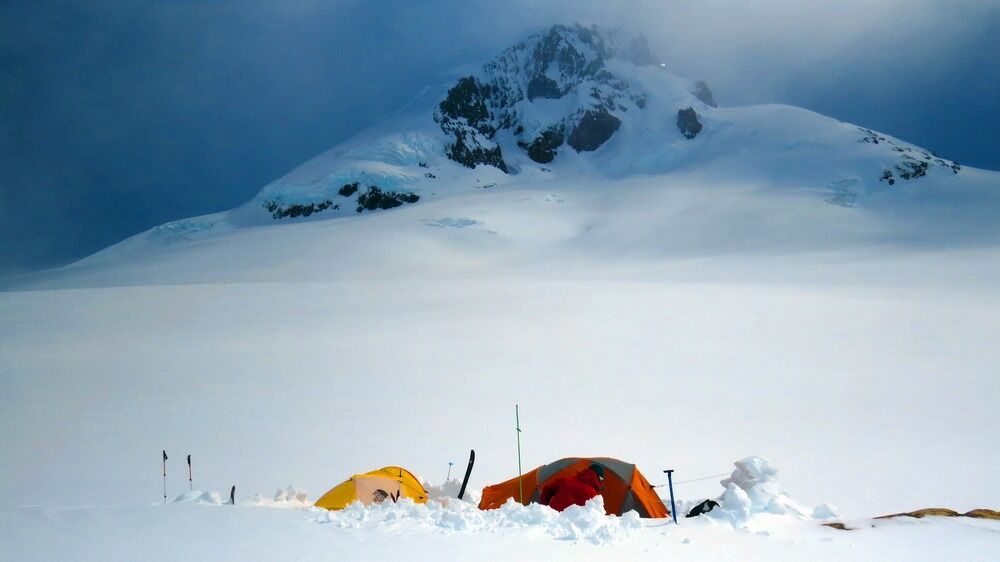
Camp Is Part of the Expedition
Camps are not recovery resorts; they are operational bases. At camp, we:
Manage equipment and clothing for the next day
Adapt plans based on updated conditions
Rest, hydrate, and maintain morale
Long waits due to weather may occur. Mental resilience and flexibility are essential to maintaining expedition rhythm.
The Guide as Expedition Leader
Your guide’s role extends far beyond navigation. They are responsible for:
Interpreting ice, terrain, and weather in real time
Making conservative decisions under uncertainty
Managing group energy across a multi‑week effort
Authority here is grounded in experience and restraint. Turning back or waiting can be the correct call — and success is measured by sound judgment, not distance covered.
Respect Defines Success
Exploring the icefields requires humility. We move with respect for:
A fragile and rapidly changing glacial environment
The limits imposed by weather and terrain
The safety of the group over individual ambition
Leaving the icefield intact — and the team intact — is the true measure of a successful expedition.
To explore the Southern Ice Fields is to accept uncertainty,
to move deliberately, and to trust the process step by step.
What is part of your adventure?
Incluye
Transportation: To and from Balmaceda Airport. Private transportation for all land and water transfers.
Accommodation: In intermediate locations, guests are accommodated in shared tents or cabins. Private tents or cabins may be available for an additional cost. During the crossing: equipped camps (expedition tents, cooking equipment, etc.).
Meals: During the expedition days: breakfast, marching rations, lunch and dinner included. Water and hot drinks are always available at the camps.
Guides: Experienced and multilingual guides provided for the activity.
Equipment: Group expedition gear. Safety and emergency equipment: radios, satellite communications (InReach), first aid kit.
Other: Support in obtaining necessary permits. National park entry fees and charges, as described in the program.
No Incluye
Transportation: Airfare from origin to Balmaceda airport.
Accommodation: Please note that lodging outside the scheduled travel program, such as additional hotel nights due to itinerary changes, is not covered and may incur extra costs.
Meals: Lunch is not included on the day of arrival in Coyhaique. Requests will be considered and accommodated whenever possible; however additional fees may be applicable. Extra beverages including alcoholic drink
Guides: Tips are not included. Porters may be arranged but will involve an additional cost.
Equipment: Personal gear (For details, consult for the recommended gear list). Personal international travel, accident and health insurance. (For further details regarding personal insurance, do not hesitate to ask).
Other: Services in Santiago if required, we will gladly assist with organizing transfers, accommodations, city tours, etc. Please contact us if needed. Additional permits: currently, no extra permit costs are anticipated. If this changes, participants will be informed and must cover these additional expenses.
Any other service not included in the program.
Preparándose para la travesía!
What level of physical fitness is required?
This experience is classified as: “Explorer – Demanding.”
You must feel comfortable walking more than 10 km per day, carrying gear, and traversing snow, ice, and rocky terrain.
Se recomienda encarecidamente tener buen equilibrio, resistencia y experiencia previa en caminatas de montaña..
How long is the trip and what is the itinerary?
Duration: 14 to 16 days
Structure: Arrival in Coyhaique (Day 1), expedition across glaciers and mountains (Days 2–14), return to Coyhaique (Day 15).
Expect long trekking days (8–9 hours, 10–12 km daily) with some “effort days” lasting over 16 hours and covering up to 18 km.
What is the best season to go?
From November to March is ideal.
Inside the ice field, daytime temperatures usually range between –1°C and –4°C.
In summer, you can expect up to 16 hours of daylight.
The weather is highly unpredictable: sun, rain, snow, or strong winds can all occur in a single day.
How many people are required for the trip to take place?
A minimum of 3 participants is required.
Small groups ensure safety and teamwork during glacier crossings.
What equipment should I bring?
Personal trekking gear (trekking boots, layered apparel, rainproof gear, backpack)
Trekking poles are highly recommended.
Group expedition gear (ropes, glacier equipment) is organized by the guides, but each traveler must carry their essential personal items.
How challenging is the terrain?
Patagonian mountains are not extremely high, but they are steep and rugged.
Trails include loose rock, mud, snow, and ice. River crossings, strong winds, and sudden weather changes are part of the adventure.
Teamwork and adaptability are essential.
Galería
Fotos
Videos
Other adventures to inspire your spirit!
Patagonia: Echos of Aisen
Ver más detalles
Una aventura en los paisajes e historia de Aisén.
Región: Patagonia Aisén, Valles circundantes al Lago Chelenko (General Carrera).
Estilo: Trekking exploratorio, fly fishing y rutas culturales.